Tactical & High-Output Flashlights
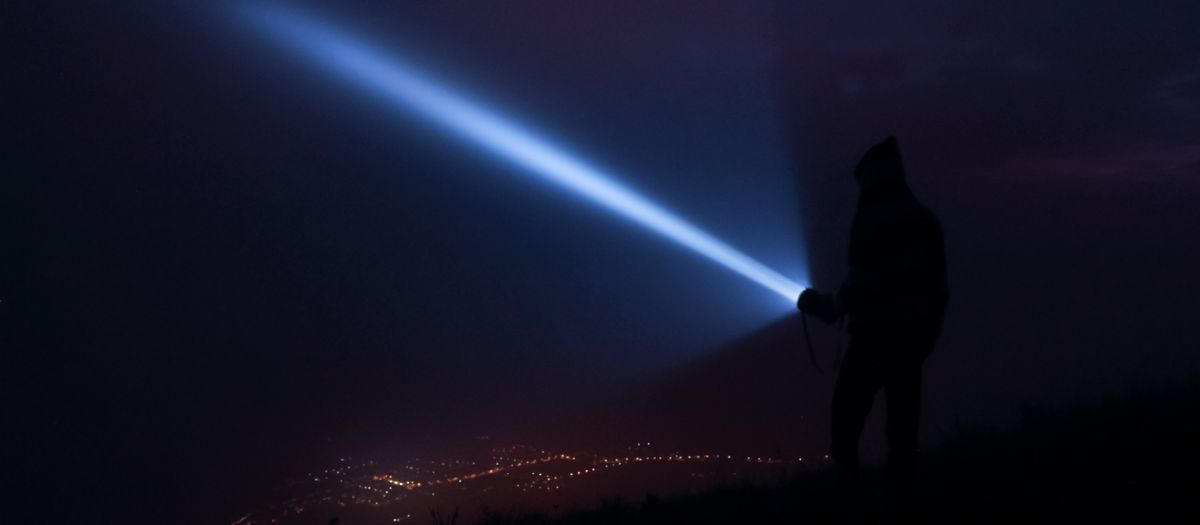
"Tactical" is the most abused word in flashlights. This silo cuts through it — what tactical actually means, the lumen tiers explained (300, 800, 1,000, 2,000, 6,000+), thrower vs flood, and the one that matters most: regulated output versus the marketing-lumen lie. A "90,000 lumen" box that does 800 real lumens for ninety seconds is the trap this silo exists to call out. Specs are quoted from manufacturer ANSI/NEMA FL-1 figures and current Amazon listings — no hands-on lux or throw testing is claimed.
What "tactical" actually means
Strip away the marketing and a genuinely tactical light is just one built for duty: it comes on bright with a single press, it holds high output without cooking itself, it throws far enough to identify what you're looking at, and it survives being dropped, soaked and knocked around. A simple, predictable interface matters as much as the output — when you need the light, you need it to do the same thing every time. The word gets slapped on any black aluminum torch with a strike bezel, but the meaningful version is about reliable, regulated FL-1 output, not a crenellated ring. The best tactical flashlight guide compares lights on exactly those terms.
The lumen tiers, explained
"How bright" is the wrong question if you stop at the peak number. The right question is how much output a light can sustain. Here are the tiers people shop by, with the honest version of what each one does.
- 300 lumens. More than enough for most close and mid-range work. Easy to sustain, kind to runtime, and frankly all a lot of people ever need. Don't dismiss it because it's not a big number.
- 800–1,000 lumens. The strong general high-output band, and the one the popular 1000 lumen flashlight class lives in. A good light here holds this level for a meaningful stretch and reaches usefully across a yard or down a trail.
- 2,000 lumens. Genuinely bright outdoors and on big jobs, but on most single-cell lights this is a turbo burst that steps down within a minute or two. Useful to have; rarely a runtime mode.
- 6,000+ lumens. Dedicated high-output territory, usually multi-emitter, with serious heat to manage. It's a flood of light for a short window, not a number you live in. Impressive, situational, and the easiest place to get fooled by a peak figure.
Real lumens vs the marketing-lumen lie
This is the section the whole site is built around. A "90,000 lumen" pocket torch is physically impossible at that size — the heat alone would need a sink the size of a coffee can — so sellers quote a theoretical emitter peak, or just make a number up, and bank on nobody checking. My first light was exactly that: blinding for ten seconds, a dim glow inside ninety, maybe 800 real lumens at best. The honest figure is the ANSI/NEMA FL-1 output, measured to a standard, paired with the runtime-to-10% number. When you put a hyped torch's sustained output next to a reputable light's FL-1 figure, the gap is enormous — and that gap is the entire reason to shop on measured output. The brightest flashlight pillar lays out the FL-1 standard in plain English.
Thrower vs flood, and why throw is candela
For high-output lights, the throw-vs-flood split matters even more than at the EDC end. A thrower concentrates output into a tight, intense hotspot to reach far — and reach is set by candela, not lumens. FL-1 measures peak beam intensity in candela, and throw in metres is roughly 2 × √(candela): a 40,000-candela light reaches about 400 m. A flood spreads the same lumens wide for close, broad coverage. A 6,000-lumen flood and a 1,000-lumen thrower can light completely different things — the flood washes a campsite, the thrower picks out a sign across a field. Decide which job you're buying for first; the flashlight matcher makes the throw-vs-flood call and recommends an output band for your use case.
Strobe, UI and duty use
Duty lights live or die on their interface. The thing you want is dead simple: instant high output from off, a predictable mode order, and ideally a fast way to a defensive strobe if that's part of your use case — without burying the modes you actually use behind a long click sequence. A clean tactical UI means the light does the same thing every time under stress, which is the whole point. Build follows the same logic: a tough IP rating, real impact resistance, and a body that handles hard use. And a factual eye-safety note that applies to every high-output emitter — don't stare into the beam and don't point it at anyone's eyes; concentrated output at close range is genuinely bright.
Frequently asked questions
What is a tactical flashlight?
A tactical flashlight is built for duty use: high sustained output, real throw, a tough body, and a simple interface that comes on bright with a single press. The word is often used loosely on marketplace listings, but the meaningful version means a light that delivers reliable, regulated output when you need it, measured to the ANSI FL-1 standard.
How many lumens is the brightest flashlight?
Genuine high-output handhelds reach into the thousands of FL-1 lumens, and dedicated multi-emitter lights go higher, but those peaks are short turbo bursts that step down to manage heat. A "90,000 lumen" marketplace torch is marketing, not measured. Judge brightness by sustained FL-1 output, not the headline number on the box.
What do the lumen tiers mean (300, 800, 1000, 2000, 6000+)?
They are rough output bands: 300 lumens handles most close work, 800 to 1,000 is a strong general high-output level, 2,000 reaches usefully outdoors, and 6,000-plus is dedicated high-output territory that runs as a burst. The tier that matters is the one a light can sustain, not just hit for a few seconds.
Is a thrower or a flood better for a tactical light?
It depends on distance. A thrower concentrates output into a tight, far-reaching beam (high candela) for spotting at range; a flood spreads it wide for close work. Many duty lights aim for strong throw with usable spill. Run your use case through the flashlight matcher to get the throw-vs-flood call and an output band.
Featured guides
The current published guide in this silo. More land each batch.
Landing next: 1000 lumen flashlight guide, Brightest flashlight explained, 2000 lumen flashlight, Lumens vs throw, What is a tactical flashlight, and Best thrower flashlight.