Best Tactical Flashlights
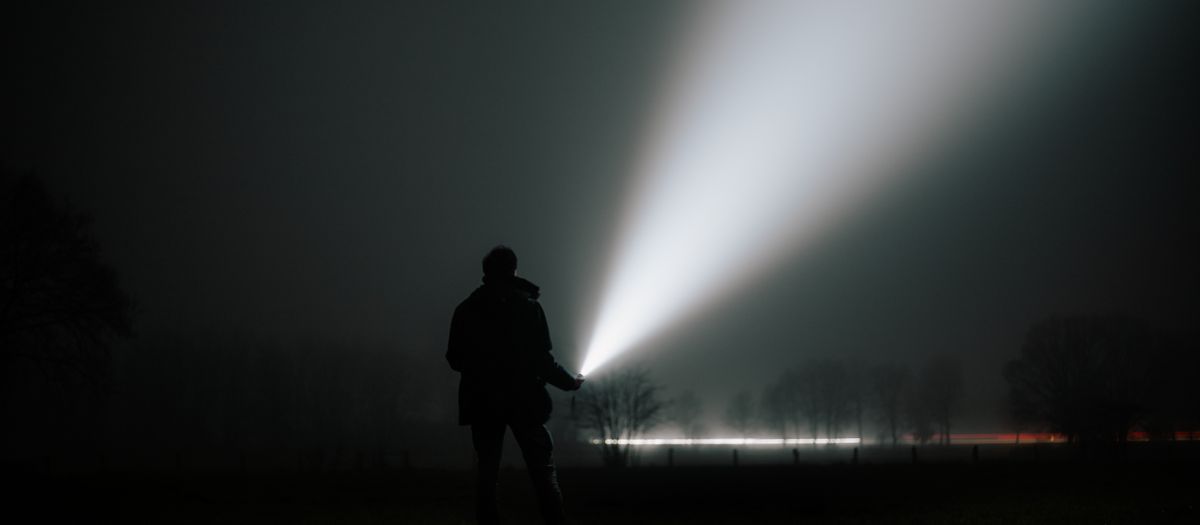
The best tactical and high-output flashlight is the one whose real output holds — not the box that shouts the biggest number. This guide explains the specs that decide which light suits you — max lumens, throw, runtime, battery and emitter — then matches them to five categories: best overall, best budget, best high-output, best thrower and best duty / EDC tactical. The verified picks appear in each slot once real product data is in.
A note on how to read this, because this is the category where the marketing lies hardest. There is no single "best" tactical light for everyone — the right one depends on whether you need reach or flood, how much runtime you want, and whether this is a duty light or a high-output tool. So the value here is the framework: what each spec changes, so you can shortlist a light that matches the job rather than fall for a fabricated number. And the numbers in this category are fabricated more than anywhere else. A single LED emitter has a physical output ceiling, so a marketplace torch screaming "90,000 lumens" is selling a fantasy — real output is a fraction of the claim, frequently a few hundred to a couple of thousand lumens, and it often steps down to a dim glow within seconds. The ANSI/NEMA FL-1 figures — regulated output and runtime-to-10% — are the honest yardstick, and a light that holds 1,000 measured lumens for an hour beats one that flashes a made-up 6,000 and fades. That is the whole "real lumens, honest runtime" thesis. Read the framework first, then look at the picks.
Lumens, runtime, throw (candela/metres), IP rating, battery type and weight are quoted from the manufacturer's published ANSI/NEMA FL-1 figures and current Amazon listings — no hands-on lux or throw testing claims. Where a maker doesn't publish an FL-1 figure we say so.
How to choose a tactical flashlight
A handful of specs decide whether a light suits you: the FL-1 max lumens and the regulated, sustained output behind it, the throw for reach, the runtime-to-10%, the battery format and the emitter. These are exactly the columns in the comparison below — read what each one changes, then read the table.
Lumen tiers and the marketing-lumen lie
Tactical and high-output lights are sold by lumen tier, which runs roughly 300, 800, 1,000, 2,000 and 6,000-plus. The tier sets how much total light the emitter pushes out, but the number that sells a light is rarely the number you can use. The marketing-lumen lie works like this: a peak figure is quoted that the light holds for a few seconds before it steps down hard to manage heat and protect the cell, and a cheap marketplace torch simply invents the peak outright. A genuine single-emitter light cannot do "90,000 lumens" — that's physically off the table — so when a box screams it, the real output is a fraction of the claim.
The honest way to read a tier is to look at the ANSI/NEMA FL-1 max lumens and then the sustained, regulated output behind it. For most duty and EDC-tactical use, 800 to 1,000 regulated lumens covers the job; 2,000-plus adds reach and flood but runs hot and burns runtime fast; 6,000-plus lights are short-burst tools, not all-night workers. Match the tier to the task, not to the biggest number — the flashlight matcher turns your use case into a recommended band, and the tactical hub walks the tiers in plain English.
Regulated output and runtime — the figure that survives
Regulation is the spec that separates a serious light from a toy. A regulated light holds a chosen output flat until the cell runs low, then steps down predictably; a direct-drive or unregulated light starts bright and sags steadily as the battery drains, so the "1,000 lumens" on the box is only true for a moment. The FL-1 runtime-to-10% tells you how long the light runs before it drops to a tenth of its starting output — read it alongside the lumen figure, never on its own.
In practice this is what "honest runtime" means. A light that holds 1,000 regulated lumens for an hour is more useful for duty, search or work than one that flashes 2,000 for ninety seconds and fades to a glow. High-output lights inevitably step down because heat and physics demand it — that step-down is expected and fine on a quality light — but the cheap torches step down hard and fast from a fabricated start. Judge a light by what it sustains, not what it peaks at.
Throw versus flood — reach measured in candela
Throw decides how far the light reaches, and it is a different spec from raw lumens. A thrower has a deep, smooth reflector or a tight optic that concentrates the beam into a far-reaching hotspot, measured in candela; the FL-1 distance in metres is roughly two times the square root of the candela figure, so a 40,000-candela light reaches about 400 metres on paper. A flood spreads the same lumens wide for close-up work and washes out at distance. Two lights with identical lumens can have wildly different reach depending on how the beam is shaped.
For a tactical light, the right call depends on the job. Searching, signalling or spotting at distance wants a thrower; clearing a room, working up close or lighting a wide area wants flood. Many duty lights aim for a usable middle ground — a defined hotspot with enough spill to see your surroundings. Decide whether reach or coverage matters more for your use before you read the lumen number, because the beam shape changes what those lumens actually do.
Battery and emitter
Two specs underpin everything above. The battery is what makes sustained high output possible: quality tactical lights run a single 18650 or 21700 Li-ion cell — or two cells in larger units — because those cells deliver the high current a bright emitter draws. A weak or wrong cell caps a light's real output no matter what the box claims, so the cell and charger matter as much as the light itself. That stack is covered in the best 18650 flashlight guide, and the battery checker confirms which cells and chargers fit. Li-ion safety is factual: charge only on a rated charger, never use a damaged or swollen cell, never carry loose cells where they can short, and follow the cell and charger manufacturer's instructions.
The emitter — the LED itself — sets the ceiling on output, beam quality and tint. A modern high-output emitter behind a good reflector or optic is what turns the cell's energy into a usable, regulated beam; a cheap emitter caps output and often renders colours poorly. High-output emitters also carry a factual eye-safety note: don't stare into the beam and don't point it at anyone's eyes, because the intensity at close range is genuinely high. Read the emitter and beam together — that pairing, not the headline lumen count, is what decides how the light performs.
| Best for | Max lumens | Throw (m) | Runtime | Battery | Emitter |
|---|---|---|---|---|---|
| Best overall | 4000 lm | ~221 m (242 yd) | Up to 350 h (Ultralow) | USB-C rechargeable (sealed charging port) | Not listed |
| Best budget | 1200 lm | 155 m | Not listed | USB-C rechargeable (built-in port) | 90 CRI LED |
| Best high-output | 2800 lm | ~380 m (416 yd) | Up to 42 h (Eco) | USB-C rechargeable (hidden charging port) | Not listed |
| Best thrower | 2000 lm | 583 m | 31h (low) | Proprietary pack, USB-C | Not listed |
| Best duty / EDC tactical | 3700 lm | 370 m | Not listed | Built-in (USB-C direct charge) | Not listed |
Our top picks
Best overall: Nitecore P20iX 4000 Lumen USB-C Rechargeable Tactical Flashlight

Best overall
Nitecore P20iX 4000 Lumen USB-C Rechargeable Tactical Flashlight
Nitecore
- Max lumens: 4000 lm
- Throw (m): ~221 m (242 yd)
- Runtime: Up to 350 h (Ultralow)
- Battery: USB-C rechargeable (sealed charging port)
- IP rating: IP68
- Emitter: Not listed
The Nitecore P20iX delivers up to 4000 lumens and a 242-yard beam from a 5.57-inch aircraft-aluminium body, with dual tail switches, a Tactical mode with instant Turbo and Strobe, USB-C charging and IP68 waterproofing.
Last checked 2026-10-09
Best budget: Wurkkos FC11C LED Flashlight, Rechargeable, 1200 Lumens, 90 CRI

Best budget
Wurkkos FC11C LED Flashlight, Rechargeable, 1200 Lumens, 90 CRI
Wurkkos
- Max lumens: 1200 lm
- Throw (m): 155 m
- Runtime: Not listed
- Battery: USB-C rechargeable (built-in port)
- IP rating: IP68
- Emitter: 90 CRI LED
The Wurkkos FC11C pairs a 90 CRI LED with 1200 lumens and a 155 m beam, constant-current (non-PWM) output, a magnetic tail cap and a built-in USB-C charging port in an IP68-rated 6063 aluminium body.
Last checked 2026-10-09
Best high-output: Fenix PD36R Pro 2800 Lumen USB-C Rechargeable Tactical Flashlight

Best high-output
Fenix PD36R Pro 2800 Lumen USB-C Rechargeable Tactical Flashlight
Fenix
- Max lumens: 2800 lm
- Throw (m): ~380 m (416 yd)
- Runtime: Up to 42 h (Eco)
- Battery: USB-C rechargeable (hidden charging port)
- IP rating: IP68
- Emitter: Not listed
The Fenix PD36R Pro reaches 2800 lumens with a 416-yard beam, a large tactical tail switch plus a function switch with instant strobe, USB-C charging behind a hidden port and an IP68-rated A6061-T6 aluminium body.
Last checked 2026-10-09
Best thrower: Streamlight 89023 ProTac 2.0 HP 2000-Lumen 85000 Candela Rechargeable High Performance Multi-Functional Tactical Flashlight, Black

Best thrower
Streamlight 89023 ProTac 2.0 HP 2000-Lumen 85000 Candela Rechargeable High Performance Multi-Functional Tactical Flashlight, Black
Streamlight
- Max lumens: 2000 lm
- Throw (m): 583 m
- Runtime: 31h (low)
- Battery: Proprietary pack, USB-C
- IP rating: IP67
- Emitter: Not listed
The Streamlight ProTac 2.0 HP produces 85,000 candela and a 583-metre beam — the longest throw in this lineup — in a ruggedised IP67 USB-C rechargeable body.
Last checked 2026-10-09
Best duty / EDC tactical: NEXTORCH P81 Rechargeable Flashlight High Lumens, 3700 Lumens LED Tactical Flashlight with 4 Modes & Strobe & Ceramic Glass Breaker for Night Duty, Outdoor Adventure, Self-Protection, Daily Use

Best duty / EDC tactical
NEXTORCH P81 Rechargeable Flashlight High Lumens, 3700 Lumens LED Tactical Flashlight with 4 Modes & Strobe & Ceramic Glass Breaker for Night Duty, Outdoor Adventure, Self-Protection, Daily Use
NEXTORCH
- Max lumens: 3700 lm
- Throw (m): 370 m
- Runtime: Not listed
- Battery: Built-in (USB-C direct charge)
- IP rating: IPX7
- Emitter: Not listed
The NEXTORCH P81 is designed for night-duty use, combining 3700 lumens, a 370m beam, dual side-press switches, and a ceramic glass breaker in a compact one-handed body.
Last checked 2026-10-09
Who should buy what
The duty and carry user — best overall and best duty / EDC tactical
If you want a tactical light to actually carry and use, the best overall and best duty / EDC tactical slots point the same way: a regulated 800–1,000 lumen light with a usable beam, a reliable two-stage UI, and runtime that holds. Spec-by-spec, that's the band that covers nearly every duty, search and EDC-tactical task without the heat, weight and runtime penalty of a high-output unit you rarely max out. A clean tactical UI — instant turbo, an easy low, no mode-scrolling when it matters — is worth more here than another thousand headline lumens.
The honest trade-off is reach and peak output: a carry-friendly duty light won't throw as far or flash as bright as a dedicated high-output tool. For the user who needs a light that works every time and rides comfortably on a belt or in a pocket, that's the right compromise — sustained, regulated output beats a brief peak you can't rely on.
The maximiser — best high-output
The best high-output slot is for the buyer who genuinely needs a wall of light: lighting a large area, search and recovery, or sheer flood at distance. The figure that matters is real, measured FL-1 output — a genuine several-thousand-lumen light from a reputable maker, not a fabricated "90,000" — paired with the sustained level it steps down to. These lights run multiple emitters or a large single LED and put out a lot of honest light for a short burst before regulating down to manage heat.
The trade-off is the trade-off of physics: high output means heat and short turbo runtime, so a high-output light is a burst tool, not an all-night worker, and it gets hot in the hand. If you don't truly need the wall of light, the overall or duty band gives you usable output for far longer. Buy this slot when the job specifically asks for maximum flood — and read the sustained figure, not just the peak.
The distance spotter — best thrower
The best thrower slot is the one category where chasing a big number is correct — but the number is candela, not lumens. A thrower concentrates its output into a tight, far-reaching beam for spotting and signalling at distance, and the FL-1 throw figure (distance in metres, roughly two times the square root of the candela) is the spec to read. A deep reflector or a tight optic is what buys reach, so two lights of equal lumens can differ hugely in how far they actually throw.
The trade-off is close-up usability: a thrower lights a workbench or a room poorly, washing out the centre and leaving the edges dark, and the tight hotspot is uncomfortable up close. This is a specialist tool for people who need to see far — hunters, search teams, anyone working across open ground. If most of your use is close work, a balanced or flood light from the overall band serves you better.
The budget buyer — best budget
The best budget slot is about getting honest, regulated output from a reputable maker without overspending — and crucially, without falling for a marketplace torch's fabricated numbers. Spec-by-spec, a budget light from a known brand with a real FL-1 figure in the 800–1,000 lumen band will out-perform a cheaper "ultra-bright" torch that claims ten times the output and delivers a fraction of it before dying. The value here is a measured number you can trust, not the biggest number on the shelf.
The trade-off is the refinements you give up: a budget light may use a lower-tier emitter, a simpler UI, a lower IP rating or a less polished beam. Those are fair compromises at the price, and far better than buying a fantasy. If you're new to tactical lights, this is the slot that gets you honest output to learn what you actually want before you spend more.
What to buy alongside the flashlight
A high-output light runs hot and hungry, so cells and charging matter — see the best 18650 flashlight guide for the battery and charger stack. A headlamp covers the hands-free jobs a handheld can’t: the best headlamps guide compares those. And the flashlight matcher turns your use case into a recommended output band.
Frequently asked questions
What is the best tactical flashlight?
The best tactical or high-output light has high regulated output, a usable beam for the job, and a simple, reliable UI — not the biggest headline lumen number. The right one depends on whether you need throw or flood and how much runtime you want. Verified picks land on this page once real product data is in.
Is the brightest flashlight always the best?
No. A "brightest" headline number is usually a peak that lasts seconds before the light steps down to protect itself. What matters is the ANSI FL-1 sustained output and runtime-to-10%. A light that holds 1,000 regulated lumens for an hour beats one that flashes 6,000 for ninety seconds and dims. The honest yardstick is the regulated, sustained figure — not the turbo printed on the box.
Are marketing lumens real on tactical lights?
Often not. A "90,000 lumen" marketplace torch almost never delivers that — real output is a fraction of the claim, frequently a few hundred to a couple of thousand lumens at best. Judge a tactical light by its measured ANSI/NEMA FL-1 figure and its sustained runtime, not by the biggest number printed on the box. This is the core of "real lumens, honest runtime": a single LED emitter has a physical output ceiling, and a headline that ignores it is marketing, not measurement.
What lumen tier do I need?
The tiers run roughly 300 / 800 / 1,000 / 2,000 / 6,000+. For most duty and EDC-tactical use, 800–1,000 regulated lumens covers it. High-output 2,000+ lights add reach and flood but run hot and burn runtime fast, and 6,000+ lights are short-burst tools that step down quickly. Match the tier to the job rather than chasing the top number — more lumens only help if the light can sustain them and your task actually needs the reach.
What is the difference between a thrower and a flood tactical light?
A thrower has a deep reflector and a tight, far-reaching beam for spotting at distance; a flood has a wide, even spread for close-up work. Tactical lights often aim for a usable middle ground. Throw is measured in candela, and the distance in metres is roughly 2 times the square root of the candela figure — so a 40,000-candela light reaches about 400 metres on paper, while a floody light of the same lumens may reach a fraction of that.
What is the most powerful flashlight you can actually carry?
The most powerful handheld lights run multiple high-output emitters or a single large LED and push real, measured output into the several-thousand-lumen range — a genuine figure, not a fabricated "90,000". The catch is runtime and heat: those lights hold peak for a short burst, step down to a sustainable level, and run hot. For carry, a regulated 1,000–2,000 lumen light that holds its output is more useful than a brief flash of a bigger number.
Do tactical flashlights use 18650 batteries?
Most quality tactical and high-output lights run a single 18650 or 21700 Li-ion cell, or two cells in larger units, because those cells deliver the high current a bright emitter needs. The battery is what makes sustained output possible, so the cell and charger matter as much as the light — see the best 18650 flashlight guide for the cell and charger stack, and follow the cell maker’s safety instructions.