Best EDC Flashlights
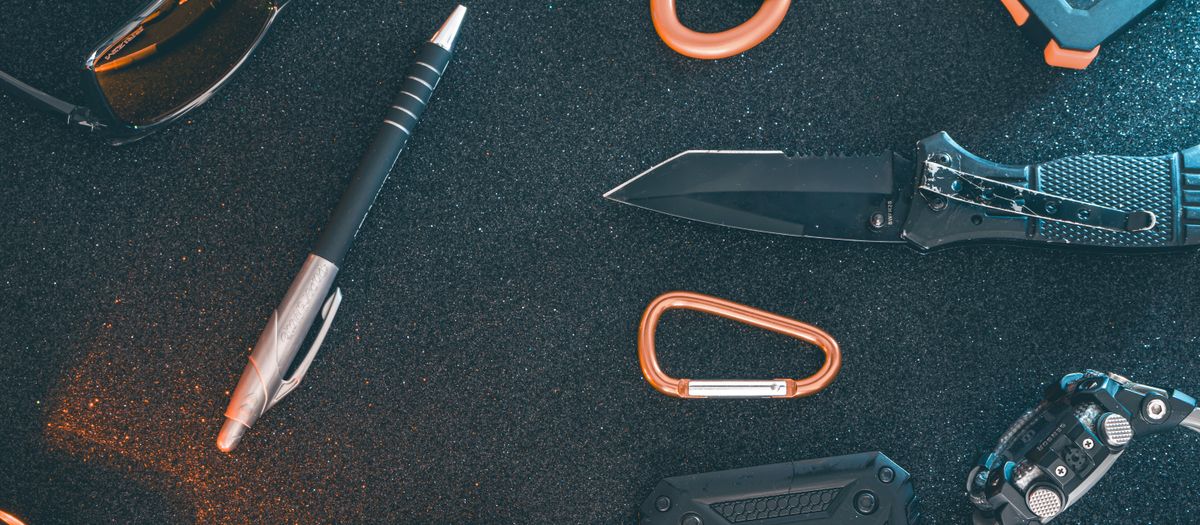
The best everyday-carry flashlight is the one you actually carry — and that does the job without stepping down to a dim glow in ninety seconds. This guide explains the specs that decide which light suits you — max lumens, throw, runtime, battery, IP rating and weight — then matches them to five categories: best overall, best budget, best pocket EDC, best keychain and best AA / work. The verified picks appear in each slot once real product data is in.
A note on how to read this. There is no single "best" EDC flashlight for everyone — the right one depends on how you carry (deep pocket, keychain, work belt), the battery format you want to live with, and whether you value output, runtime or sheer pocketability most. So the value here is the framework: what each spec changes, so you can shortlist a light that matches your carry rather than chase the biggest headline number. That headline number is the whole trap. The marketplace is full of torches that scream "90,000 lumens" off the box and deliver a fraction of it for seconds before stepping down to a dim glow and eating their battery. The ANSI FL-1 figures — regulated output and runtime-to-10% — are what actually matter, and a light that holds 600 honest lumens for two hours beats one that flashes a fantasy number and fades. Read the framework first, then look at the picks.
Lumens, runtime, throw (candela/metres), IP rating, battery type and weight are quoted from the manufacturer's published ANSI/NEMA FL-1 figures and current Amazon listings — no hands-on lux or throw testing claims. Where a maker doesn't publish an FL-1 figure we say so.
How to choose an EDC flashlight
A handful of specs decide whether a light suits you: the FL-1 max lumens and the runtime-to-10% that comes with it, the throw vs flood balance for your use case, the battery format, the IP rating and the carry weight. These are exactly the columns in the comparison below — read what each one changes, then read the table.
Max lumens and runtime — the number behind the number
Lumens measure total output, but the peak printed on the box is the least useful figure on the spec sheet. The ANSI/NEMA FL-1 standard quotes a max lumens number and a separate runtime-to-10% — how long the light runs before it drops to a tenth of that output. Most lights hit their headline figure on turbo for a minute or two, then step down to a sustainable level to manage heat and protect the cell. That step-down is normal and expected on a regulated light; the problem is the cheap torches that step down hard and fast from a fabricated number. Spec-by-spec, a 1,000-lumen EDC light on a 2,000mAh 18650 typically holds a usable ~300 lumens for roughly two and a half hours — that sustained figure, not the turbo, is what you carry.
For everyday carry you rarely need the top end. A usable moonlight mode and a 50–150 lumen mode do most of the day's work — finding keys, checking a fuse, walking the dog — and 800 to 1,000 lumens covers almost any task or outdoor use. The honest question is not "how bright is the turbo" but "does it hold useful output long enough for what I do". Run the flashlight matcher to turn your use case into a recommended output band.
Throw versus flood — match the beam to the task
Beam shape decides how the light feels in use. Flood is a wide, even spread for everything within arm's reach and a few metres beyond — the right beam for most EDC tasks, close work and walking. Throw is a tighter beam that reaches further, measured in candela; the FL-1 distance in metres is roughly two times the square root of the candela figure. A deep-reflector thrower spots a sign or a dog across a field but lights a desk poorly, while a floody light is comfortable up close but won't reach.
For a single everyday-carry light, a balanced beam with a usable hotspot and enough spill is the safe choice — it does close work without dazzling you and still reaches far enough for the occasional spot. If you specifically need distance, that's a job for a thrower from the tactical and high-output side rather than a compromise EDC light. Match the beam to the task you do most, not the rare one.
Battery — 18650, 21700, AA or built-in USB-C
Battery format is the spec that sets output, runtime and how you live with the light. A single 18650 is the enthusiast everyday-carry sweet spot — high capacity in a slim, pocketable body, with enough energy to run strong output for hours. A 21700 holds more and runs longer, at a little more bulk. AAA and AA lights trade output for convenience, since the cells are available anywhere, which makes them ideal for a keychain, a glovebox or a backup. Built-in USB-C charging adds the convenience of topping up without a separate charger, though it ties you to the internal cell.
Most enthusiasts carry a single-18650 light with USB-C as the main and keep an AA backup somewhere they can't recharge. If your light uses a swappable 18650 or 21700, a charged spare in a cell case means you're never stuck. The cell and charger stack is covered in the best 18650 flashlight guide, and the battery checker confirms which cells and chargers fit a given format. Li-ion safety is factual and non-negotiable: charge cells only on a charger rated for that cell, never use a damaged or swollen cell, and never carry loose cells where they can short against keys or coins — use a cell case, and follow the cell and charger manufacturer's instructions.
IP rating, weight and UI
Three smaller specs round out the fit. The IP rating tells you how the light handles dust and water: IPX8 (submersible) or IP67/IP68 (dust and water sealed) shrugs off rain, splashes and an accidental drop in a puddle, which is what everyday carry asks for. A lower rating is fine for indoor or light use, but the figure is published to the FL-1 standard, so check it rather than guess. Weight and size are what decide whether the light stays in your pocket — a slim 18650 clips in and disappears, while a chunky light gets left at home, and a light that stays home does nothing.
The user interface is the spec no number captures but everyone lives with. A simple, predictable UI — a clear path to moonlight, a sensible mode order, a turbo you can reach but won't trigger by accident — is what makes a light pleasant day to day. For work and gloved use, a clicky or a large-button UI beats a fiddly one, and a magnetic tail or a strong clip that holds the light where you need it is worth more than another hundred lumens. These are the details that decide whether a light becomes the one you reach for.
| Best for | Max lumens | Throw (m) | Runtime | Battery | IP rating |
|---|---|---|---|---|---|
| Best overall | 3100 lm | ~260 m (284 yd) | ~1 h (turbo) to 69 h (eco) | USB-C rechargeable | IP68 |
| Best budget | 1100 lm | Not listed | Not listed | Built-in (USB-C rechargeable) | Not listed |
| Best pocket EDC | 1800 lm | ~519 m | Not listed | Not listed | Not listed |
| Best keychain | 80 lm | Not listed | Not listed | Built-in (USB-C plug) | Not listed |
| Best AA / work | 250 lm | Not listed | Not listed | Built-in + 1 × AAA backup | Not listed |
Our top picks
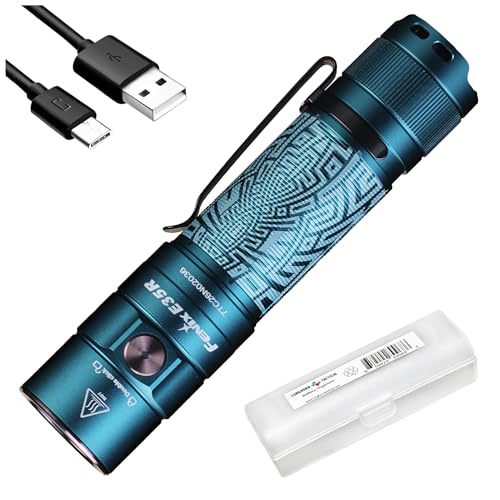
Best overall: Fenix E35R Rechargeable EDC Flashlight, 3100 Lumens, USB-C
Best overall
Fenix E35R Rechargeable EDC Flashlight, 3100 Lumens, USB-C
Fenix
- Max lumens: 3100 lm
- Throw (m): ~260 m (284 yd)
- Runtime: ~1 h (turbo) to 69 h (eco)
- Battery: USB-C rechargeable
- IP rating: IP68
- Weight: 5.22 oz (148 g)
The Fenix E35R puts 3100 lumens and a 284-yard beam into a body under 4.7 inches long and 5.22 oz, with a single side switch, USB-C charging, a lockout mode and IP68 waterproofing.
Last checked 2026-10-09
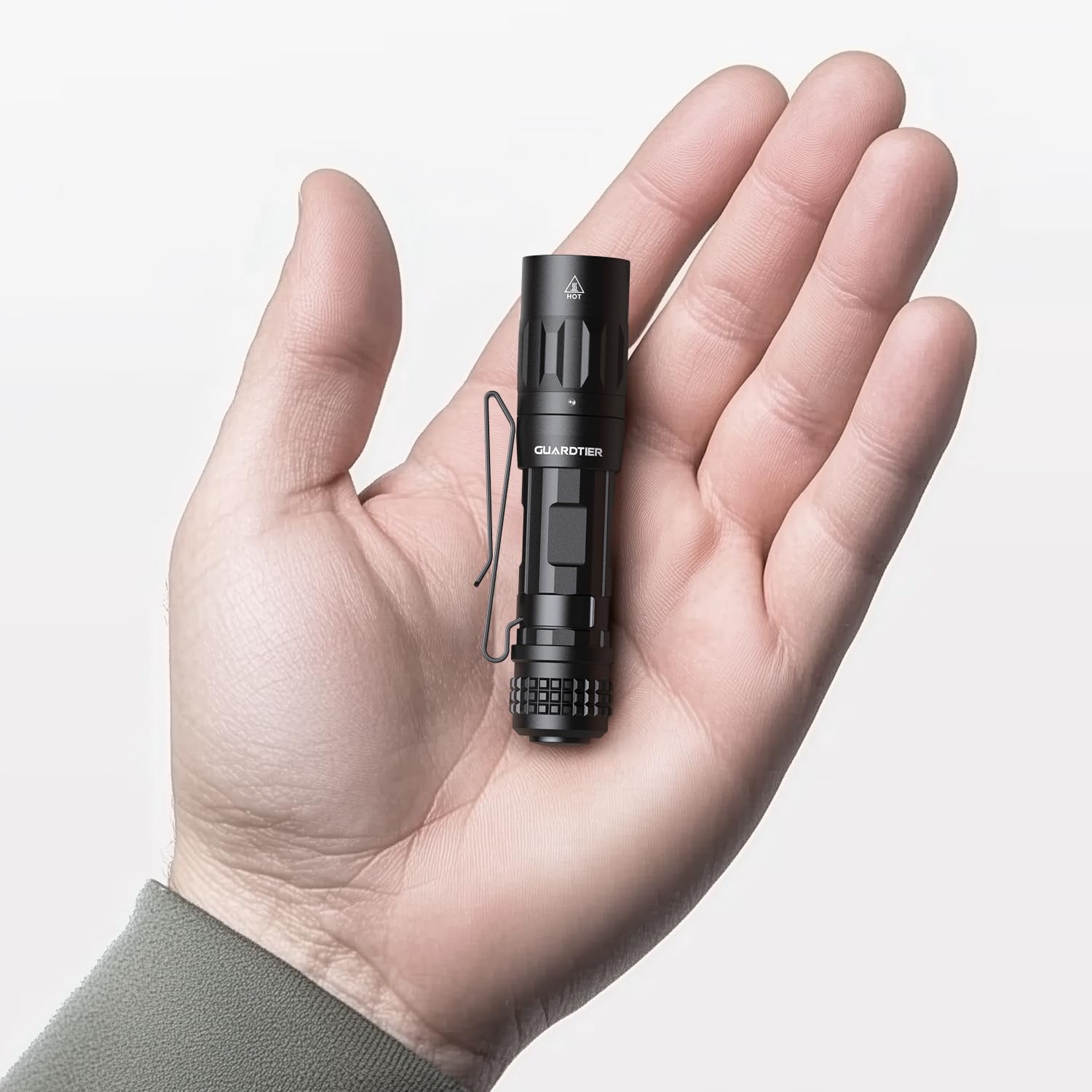
Best budget: Guardtier M70 LED Flashlight Rechargeable 1100 Lumens USB-C Charging Small Pocket Flashlight with Clip 5 Modes for EDC Camping
Best budget
Guardtier M70 LED Flashlight Rechargeable 1100 Lumens USB-C Charging Small Pocket Flashlight with Clip 5 Modes for EDC Camping
Guardtier
- Max lumens: 1100 lm
- Throw (m): Not listed
- Runtime: Not listed
- Battery: Built-in (USB-C rechargeable)
- IP rating: Not listed
- Weight: Not listed
The Guardtier M70 offers 1100 lumens, a pocket clip, and USB-C charging for under $18, making it the best budget EDC flashlight currently available on Amazon.
Last checked 2026-10-09
Best pocket EDC: Nitecore MT2C Pro LED Flashlight 1800 Lumens Compact Slim Lightweight EDC Flashlight USB-C Rechargeable with LumenTac Organizer

Best pocket EDC
Nitecore MT2C Pro LED Flashlight 1800 Lumens Compact Slim Lightweight EDC Flashlight USB-C Rechargeable with LumenTac Organizer
Nitecore
- Max lumens: 1800 lm
- Throw (m): ~519 m
- Runtime: Not listed
- Battery: Not listed
- IP rating: Not listed
- Weight: 4.02 oz (114 g)
The Nitecore MT2C Pro combines 1800 lumens with a slim 4.02 oz body and a 519-metre throw, offering high-output pocket performance for serious EDC users.
Last checked 2026-10-09
Best keychain: OLIGHT iUltra Keychain LED Flashlight 80 Lumens Magnetic Rechargeable Mini Pocket Light with Built-in USB-C Charging Plug

Best keychain
OLIGHT iUltra Keychain LED Flashlight 80 Lumens Magnetic Rechargeable Mini Pocket Light with Built-in USB-C Charging Plug
OLIGHT
- Max lumens: 80 lm
- Throw (m): Not listed
- Runtime: Not listed
- Battery: Built-in (USB-C plug)
- IP rating: Not listed
- Weight: Not listed
The OLIGHT iUltra is a keychain-sized light with a built-in USB-C charging plug and magnetic base, designed for everyday carry on a keyring or bag.
Last checked 2026-10-09
Best AA / work: Streamlight 66608 MicroStream USB Rechargeable Pocket Flashlight, 250 Lumens with USB Charging Cable - Black

Best AA / work
Streamlight 66608 MicroStream USB Rechargeable Pocket Flashlight, 250 Lumens with USB Charging Cable - Black
Streamlight
- Max lumens: 250 lm
- Throw (m): Not listed
- Runtime: Not listed
- Battery: Built-in + 1 × AAA backup
- IP rating: Not listed
- Weight: Not listed
The Streamlight MicroStream USB is a proven compact work light from a professional brand, under 4 inches long with a pocket clip and USB rechargeable built-in battery.
Last checked 2026-10-09
Who should buy what
The everyday carrier — best overall and best budget
If you want one light to live in your pocket, the best overall and best budget slots point the same way: a single-18650 light in the 800–1,200 lumen band with USB-C charging, a strong pocket clip and a simple UI. Spec-by-spec, that combination gives you more output than everyday tasks need, runtime that holds for hours, and a body slim enough that it stays clipped in your pocket instead of in a drawer. The budget slot trades a little fit and finish, a lower-tier emitter or a basic UI for a lower price — the right call if this is a first enthusiast light rather than a forever carry.
The honest trade-off is that a do-everything light is a balance, not a specialist — it floods and throws well enough without excelling at either. For the vast majority of buyers that's exactly what everyday carry wants, because the light you carry every day beats the perfect light you leave at home. This is the band most people should shop first.
The slim carrier — best pocket EDC and best keychain
The best pocket EDC and best keychain slots are for buyers who prize size above all. A slim pocket EDC trims the 18650 body to the smallest package that still runs useful output and runtime, while a keychain light — usually AAA or a tiny built-in cell — is about always-there convenience for finding a lock, a dropped phone or a fuse box. The figure that matters here is weight and dimensions, not turbo lumens; a keychain light that's actually on your keys beats a brighter one you leave behind.
The trade-off is output and runtime: smaller cells hold less energy, so a keychain light won't match a full 18650 for sustained brightness or hours of use. That's the right compromise when the job is convenience rather than work — many people carry a slim main light plus a keychain backup so they're never without something. Match the size to how you carry, then check the runtime so the trade-off is one you've chosen on purpose.
The worker — best AA / work and mechanic use
The best AA / work slot suits the buyer who needs a light that survives a jobsite and runs on cells they can find anywhere. The specs that matter are a high IP rating for dust, oil and rain, a usable flood for close-up work, a strong clip or magnetic tail to hold the light hands-free, and a UI you can run with gloves on. A high-CRI emitter renders colours more honestly under a hood or in a panel, which is worth more to a mechanic than another few hundred lumens of cool-white turbo.
AA convenience is the headline draw here: when a cell dies on a shift, a fresh one is in every glovebox, drawer and corner store, with no charger needed. The trade-off versus an 18650 is peak output and running cost, so heavy daily users often pair a rechargeable main light with an AA work or backup light. Pick the format around where and how you'll use it, not the spec sheet's biggest number.
What to buy alongside the flashlight
An EDC light is the start of a small, natural cart. Cells and charging come next — see the best 18650 flashlight guide for the battery and charger stack. A headlamp covers the hands-free jobs a handheld can’t: the best headlamps guide compares those. And the flashlight matcher turns your use case into a recommended output band.
Frequently asked questions
What is the best EDC flashlight?
For most people a single-18650 light in the 800–1,200 lumen range with a pocket clip and a simple UI is the best everyday-carry pick — enough output for any task, with runtime that holds. The right one depends on your use case and battery preference. Verified picks land on this page once real product data is in.
How many lumens does an EDC flashlight need?
For everyday tasks, 100–300 lumens is plenty, and 800–1,000 covers almost all work and outdoor use. Read the ANSI FL-1 figure and the runtime-to-10%, not the peak — a light that holds steady output for hours beats one that flashes a big number and dims in ninety seconds. Most of the time you carry an EDC light on its lower modes, so a usable moonlight and a 50–150 lumen mode matter more day to day than the turbo number.
Is a rechargeable or AA EDC light better?
A rechargeable (18650/21700 or built-in USB-C) gives the highest output and lowest running cost, which is why most enthusiasts carry one. AA lights win on convenience — cells are everywhere, which suits a backup or glovebox light. Many people carry a rechargeable main light and keep an AA backup. A single-18650 light with USB-C charging is the most common enthusiast everyday carry for exactly that balance of output, runtime and convenience.
What size EDC flashlight should I carry?
A single-18650 light is the sweet spot for most pockets — enough output and runtime without bulk. A keychain or AAA light suits ultralight carry and quick tasks. A larger 21700 light trades a little pocketability for more runtime and output. The best size is the one you’ll actually carry every day — a light that stays home because it’s too bulky does nothing, while a slim 18650 clipped in a pocket is there when you need it.
What IP rating does an EDC light need?
For everyday carry, IPX8 (submersible) or IP67/IP68 (dust and water sealed) covers rain, splashes and accidental drops in water. A lower rating is fine for indoor or light use. The IP figure is published to the FL-1 standard, so check it on the spec sheet rather than guessing.
What is the best EDC flashlight for a mechanic or tradie?
A work or mechanic light wants a usable flood for close-up work, a strong clip or magnetic tail to hold it where you need it, and an IP rating that shrugs off dust, oil and rain. Output in the 500–1,000 lumen band covers most jobs, and a high CRI emitter renders colours more honestly under the hood or in a panel. Runtime that lasts a shift and a simple UI you can run with gloves on matter more than a big turbo number.
Why does my flashlight get dim so fast?
Most lights advertise a peak turbo number they can only hold for a minute or two before stepping down to manage heat — that drop is the step-down, and it is normal on regulated lights. The problem is the cheap marketplace torches that step down hard and fast from a fabricated headline figure. Read the ANSI FL-1 runtime-to-10%: a light that holds 600 honest lumens for two hours beats one that flashes 2,000 for ninety seconds and fades.