People agonise over lumens and barely think about the cell. That’s backwards. The battery format you choose decides your light’s runtime, its size in your pocket, and how easy it is to keep the thing running for years. I keep a single-18650 light as my daily carry and a AA backup in the glovebox, and that split is a deliberate choice. Here’s the honest trade-off between the three formats most carry lights use.
The three formats, quickly
18650 — a lithium-ion cell, 18mm × 65mm. The workhorse of good EDC lights. Big energy in a pocket-friendly size. Rechargeable, and increasingly the light charges it over USB-C on the body.
21700 — also lithium-ion, just bigger: 21mm × 70mm. More diameter, more length, more energy. It’s the cell behind the higher-output and longer-runtime lights. Same chemistry as the 18650, more of it.
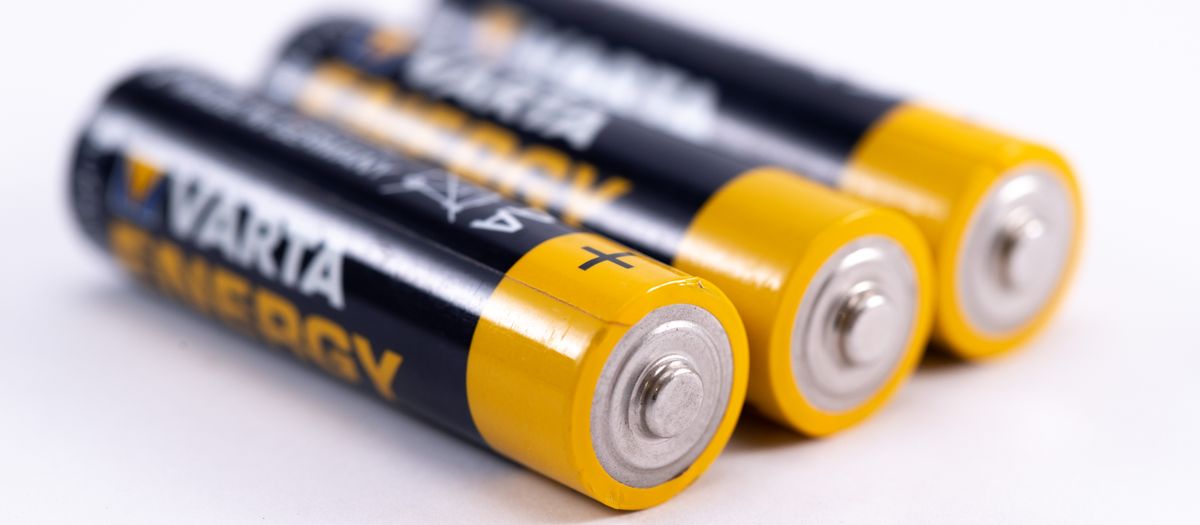
AA — the humble alkaline or NiMH cell you can buy anywhere on earth. Far less energy than the lithium cells, but unbeatable on availability and simplicity.
Runtime: energy is the whole game
Think of each cell as a fuel tank. Roughly:
- A 21700 holds the most energy — it’s the biggest tank. That’s why 21700 lights post the longest runtimes and the highest sustained outputs.
- An 18650 holds plenty — enough to run a regulated 1,000-ish lumens for a couple of hours on the FL-1 runtime figure, and many hours on lower modes. For everyday carry it’s more than enough.
- A AA holds far less. A single-AA light is genuinely useful for close work at modest output, but it won’t hold high lumens, and it won’t run as long. Its strength was never capacity.
If raw runtime and output are your priority, the order is clear: 21700, then 18650, then AA. But runtime isn’t the only thing you live with.
Size: the tank you carry is the tank in your pocket
The same energy that makes the 21700 great is what makes it bigger. A twin-21700 high-output light is a substantial thing — fantastic on a belt or in a bag, a noticeable brick in jeans. A single-18650 light is the one I forget is clipped in my pocket all day. A single-AA light can be tiny and light.
This is exactly why I land on the 18650 for carry: it’s the format that holds serious energy in a size you’ll actually keep in your pocket every day. The 21700 wins on paper and loses on “did you bring it.” The smallest AA lights win on size and lose on runtime.
Availability and “can I keep it running”
Here’s where the AA claws back a lot of ground, and why it lives in my glovebox.
- AA is everywhere. Gas station, hardware store, a junk drawer, a TV remote in a pinch. If a AA light dies in the middle of nowhere, you can almost certainly find a fresh cell. That’s a real kind of reliability that no spec sheet captures. For an emergency backup you might not touch for a year, that ubiquity is the whole point.
- 18650 and 21700 you plan for. They’re rechargeable, so the model is: charge them, carry a spare in a cell case, top up over USB-C. You won’t find a loose 18650 at a gas station, but you also rarely need to — you charge it like a phone and keep a spare. For a daily carry you maintain, that’s no burden at all.
So the question isn’t just “which holds more energy,” it’s “which matches how I’ll keep it fed.” A daily light I maintain → lithium (18650 for carry, 21700 for max output). A grab-and-forget emergency light → AA, because I might not have charged it in months and I can buy a cell anywhere.
The safety part, plainly
The two lithium formats — 18650 and 21700 — carry real energy and need real habits. Charge them only on a charger rated for that cell. Never charge a damaged or swollen cell. Never carry a loose cell where it can short against keys or coins — use a cell case. Follow the cell and charger manufacturer’s instructions, and use the maker’s recommended cell and charger. AA NiMH and alkaline are far more forgiving, which is part of why a AA backup is such a low-stress thing to stash and ignore.
How I’d choose
- Daily carry, one light to do everything: single-18650. Best balance of runtime, size and battery sanity. It’s what’s in my pocket.
- Maximum output and runtime, size no object: 21700. The biggest tank, for work lights and long nights.
- Grab-and-forget backup, or “I want to buy cells anywhere”: AA. Less capacity, unbeatable availability.
Most people are well served carrying an 18650 light and stashing a AA backup — exactly the split I run. If you want to see the lights and chargers that make the 18650 easy to live with, the best 18650 flashlights guide lays out the format end to end: cells, charging, and the lights that get it right.